Tuesday, February 23, 2010

Notes from the Edge


There is no place of comfort on the edge.

But then, who needs comfort. She’s been too comfortable her whole life. She sits before the web cam. She turns on the camera and slowly removes her clothes. She’s had three glasses of wine at dinner, but it’s way too early to go to bed.

Click.

She reaches her hand forward, her fingers pressing the mouse to freeze the image, her eyes gazing directly into the shining eye of light at the top of the screen.

Click.

She tilts her head and rotates her shoulder slightly, hoping to make her body look younger.

Click. And click again.

She puts her glasses on and leans forward, squinting at the pictures of herself on the screen. She is surprised by how pink and soft and vulnerable her body looks.

She removes the glasses.

Delete. Delete. Delete.

Later, weeks later, she is once again in front of her computer and she wants to delete something else. She clicks on her recycle bin and is jolted by those images she’d forgotten she had taken.

She clicks on Permanently Delete, shuts down her computer and decides to go outside.

It is snowing. Not that lovely peaceful beautiful snow from the first big snow storm last week, but an a nasty, angry, cold wet snow that burdens the electric wires - she knows that this snow will soon bring darkness, the lack of heat, the cold.

She is not dressed for the cold, but at least she is dressed, she chuckles to herself. Her feet are wet and frozen but she walks on. The cul de sac is long and she makes herself walk so far that it would be equally distant to turn back as it is to move keep moving forward.

She stops. She steps outside herself and sees what others, looking out their windows might see - a ridiculous old woman with no boots, an inadequate coat, and a bare head, trudging through the snow, now, frozen in her tracks.

This is post mid-life, she says to no one, her hands extended towards the sky, her head tilted back, inviting the snow to alight on her nose, her cheek, her eye.

I would rather be walking along the edge than frozen to the ground on a cul de sac.

Let me move to the 30th floor of a city apartment with a view of the river on one side and the expanse of neighborhoods on the other.

My favorite place is on the edge of the city, atop Belmont Plateau. There, the buildings of downtown Philadelphia stretch from bridge to bridge, from river to river. When I worked, I would detour past this spot on my way home everyday and no matter the time or the season, I would always brake - sometimes for several minutes, sometimes only for a few seconds, taking note of the color, the light and the texture of the familiar buildings. There was an energy pulsing through the cement and stone and glass, infusing the skyline with life. And even though the outline and tableaux of the buildings always appeared the same, the mood and the hues and the shadows were infinitely and astonishly different each time I stopped.


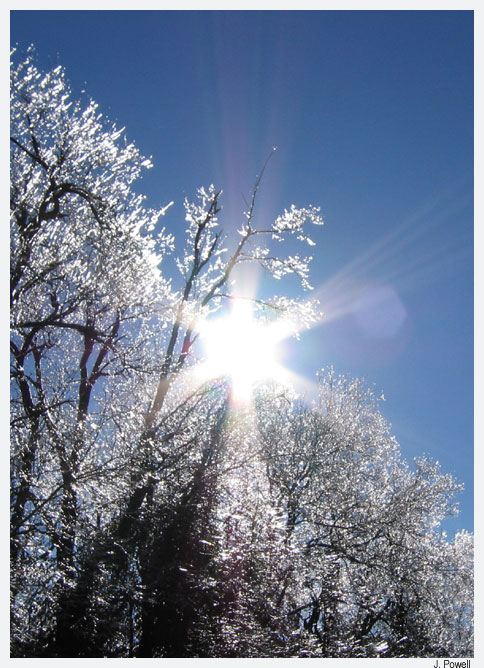
Back in the cul de sac, this tree in winter is what has has stopped her in her tracks. Before her eyes, its stark brown bark and grey branches begin to fade, then disappear completely before turning into pure energy shimmering with light and humming with sound. She stands transfixed until she is embraced by the sympathetic vibrations rising up in her, meshing with the beat of her heart and letting her know without a doubt, that she too is alive.


Sunday, February 21, 2010

An Early Writing Memory - The Stories We Tell


The summer before I entered 7th grade I wrote a book. I wrote it in one of those ubiquitous marble copy books that all American adults of a certain age will forever associate with school. But instead of writing my name, grade and subject on the appropriate box on the front cover in the spaces provided, I wrote “The Blind Love of Kirk and Ellen: A Love Story of Courage and Hope” by Marsha Rosenzweig.
If you opened the first page you would have seen a Table of Contents, the chapter titles written in ink in several different styles of handwriting. At twelve, I was shaping my identity as much as I was crafting my script, experimenting with flourishes and loops on the empty lined paper just as I would play with the thickness of black eyeliner and shades of lipstick on my blank face. Through all of the shape-shifting, there was one part of my identity that was a constant. I was a writer. Even before I had learned to write my letters, my mother told me that I would take a pencil and scrawl inscrutable symbols on whatever paper I could find, then “read” her the “stories” I had written. “The Blind Love of Kirk and Ellen” was just one of many books I wrote during my childhood and early adolescence.
Kirk and Ellen were both seventeen years old when they fell in love. They had known each other all their lives, living across the street from one another in almost identical split level semi-suburban shingle roofed homes, not a whole lot different from the one I lived in. Ellen’s bedroom, where she would talk to Kirk for hours on the telephone, hiding under the covers so her mother wouldn’t hear, was painted the same lavender color as mine and her bed spread resembled the flowered comforter I had wanted my mother to buy for me instead of the white chenille cover that didn’t provide nearly enough privacy when I would call my girlfriend Jackie on the phone and read to her by flashlight the latest chapter of my burgeoning oeuvre.
I don’t remember whether it was my idea or Jackie’s to send my manuscript to Berkeley-Highland. All of the books we owned at that time were published by Berkeley Highland Books. With authors like Rosamond du Jardin and Betty Cavannah and titles like Trish, A Date for Diane, Showboat Summer and Class Ring, these books with their signature scotch paid symbol in the upper left hand corner offered their twelve year old readers glimpses into the romance-filled world of their popular boy-crazy older sisters. What I do remember is that with Jackie’s encouragement, I bought a large envelope and lots of stamps, looked up the publisher’s address inside my copy of “A Girl Like Me” and placed my entire marble copy book inside. Along with the marble manuscript, I wrote a letter that said something like the following:

Dear Publishers:
I have been reading Berkeley Highland books for many years and I think it is about time for you to publish books for teenage girls written by teenage girls. We are better able to write about what our lives are REALLY like…. Enclosed is my book….etc.etc.
Marsha Rosenzweig, a REAL teenage girl.


Never mind that this realistic teenage novel was a love story between young adults whose love is tested when the young woman Ellen is blinded after being hit by a car and the young man Kirk tracks down the man driving the car who just so happened to have been Ellen’s estranged father who is then brought to justice, serves jail time, escapes, tries to run down Kirk who ends up paralyzed. The book ends on their wedding day as a brave Ellen pledges to be Kirk’s legs, while a courageous Kirk promises to be Ellen’s eyes forever.

Seventh grade began several weeks after I sent my novel off to be considered for publication (the first and last time I ever sent an unsolicited manuscript to anyone) and I soon forgot about my authorial aspirations, instead caught up in the exigencies of the junior high school social scene. So it came as quite a surprise when several months later, a package arrived for me from Berkeley Highland Publishing Company. I opened it hopefully until I saw the tell-tale black and white markings of my copy book attached by a paper clip to my very first rejection letter.


Monday, January 4, 2010

A Dancing and Soaring Spirit: Remembering Adele Magner 10 Years Later


When my dear friend, colleague and mentor Adele Magner passed away ten years ago, January 6th, I was asked to give one of the eulogies at her funeral. It was the most difficult thing I had ever had to do in my life. Knowing that Adele loved theater and had dedicated do much of her life supporting young people in finding their voices and writing their own plays, I turned to plays for inspiration. Rent, with its song, Seasons of Love offered me some solace as well as a framework for honoring Adele. I began the eulogy with the words:
Five hundred-twenty-five thousand six hundred minutes
Five hundred twenty-five thousand moments so dear
Five hundred thousand six hundred minutes
How do you measure, measure a year?


As we approach the 10th anniversary of her death, I am struck by the passage of time.
525,600 times 10 equals 5,250,600. Five million, two hundred twenty-five thousand six hundred minutes. That's how long she's been gone. Yet, her spirit is eternal, and I am still touched by her influence as has thousands and thousands of others.

For my blog today, I share the eulogy I delivered over five million minutes ago, honoring Adele and her seasons of love.


Five hundred-twenty-five thousand six hundred minutes
Five hundred twenty-five thousand moments so dear
Five hundred thousand six hundred minutes
How do you measure, measure a year?

The characters in Jonathan Larson’s musical Rent measure their lives in daylights and sunsets and midnights and cups of coffee.But if you are at all involved with Adele and the Philadelphia Young Playwrights Festival, also known as PYPF, you’d know to measure a year in:

workshops and meetings, in laughter and stories,
in budgets, productions, in friendships and plays;
in teachers and playwrights and artists and children,
this is how Adele and Young Playwrights measure our days.

For when you become part of The Philadelphia Young Playwrights Festival you enter into a world delineated by this creative process. Even the seasons are marked by the cycle of PYPF events: There’s the Fall retreat, the Winter Workshops, The Spring Productions, The Summer Script Reading. One year leading naturally and predictably into the next, like a never-ending circle whose beginning emerges from its end.
The Philadelphia Young playwrights Festival was born from an idea, a commitment, a passion that Adele had – that every child from the inner city to the suburbs, from the honors students to the apparent underachievers - could write a play. During a sabbatical, she traveled to New York to meet with Gerald Chapman, he founder of the New York Young Playwrights Festival, and doggedly proceeded to do everything in her power to create a similar program here. While Adele admired Gerald Chapman and learned much from him, she didn’t imitate his program – she created her own – one which is brimming with her unique talents, values, and joie de vivre. Simply stated, Adele believed that every single person is important and that it is a crime not to laugh, eat and have a good time.
This was immediately evident when I met Adele in 1987 at the first Fall Teachers Retreat, the first of twelve I would go on to attend. Immediately, I knew that I was in the presence of something very special. First, the very idea of it was unique: an overnight retreat for teachers to learn about teaching playwriting to our students by learning to write our own plays. Second, the entire week-end had been carefully designed to foster our creativity and comfort. Steak and lobster was on the dinner menu Friday night and the accommodations were lovely. And third, the combination of people Adele had gathered together was extraordinary: teachers and administrators from Philadelphia and Cheltenham, professional playwrights and college professors, and most telling of all – her close friends and family members. I can still picture her son, Aron, then twelve years of age, acting in a play for us after dinner.
In August Wilson’s play, Joe Turner’s Come and Gone, Bynum Walker says that every person must find his song to be at peace with himself in life. Well I believe that Adele knew her song and it was a song of connection and possibility. She has been able to bring diverse and disparate individuals together in a spirit of cooperation, not competition. She has created the context for us to become a nurturing and creative community – teaching us through her example how to do the same for our students.
Adele’s energy derived from fusion. – Unlike fission which fragments and divides, whose by-product is toxic and destructive, the by product of fusion is water which promotes growth. And did Young Playwrights ever grow! From a dozen high school classrooms and 90 scripts in 1987 to hundreds of teachers, thousands of students in public, private, Catholic, Jewish, Quaker, city, suburban, elementary middle, and high schools in a dozen school districts in South eastern Pennsylvania and New Jersey. Last year nearly one thousand plays were submitted – each read and responded to by an ever growing literary committee made up of friends and supporters of PYPF.
And you’d have to be careful if you ever told Adele that you had an idea, lest she’d have you turning into a new program before you know what hit you. There was Stage Write, bringing together city and suburban students as partners in the playwriting process; New Visions, which brought playwriting into classes across the disciplines and Anti-Violence Program which uses playwriting as a tool to help young people stave off violence in their lives.
These are but a few of the endless possibilities which can emerge from the powerful combinations of people that Adele has bought together.
In explaining the mission of PYPF Adele has said, “We believe that every young person has something vitally important to say and we help students to shape their plays into works that have appeal for theater goers of all ages. PYPF students learn the power of the word and the magic that happens when others listen.” I have witnessed this magic in my own and others’ classrooms over the past twelve years. The young playwright doesn’t just get to be heard but enters into an active dialogue with the world - a dialogue which can bring about positive transformation. As Adele always reminded us, “By writing about their world, young people are seizing the power to change it.”
There is the saying, “When you are ready to learn, a teacher will appear.” Adele was that teacher for me who appeared in my life at the precise moment I was searching and ready. Now it is our turn to become the teachers for other seekers we have yet to meet.

Five hundred, twenty-five thousand, six hundred minutes
How do you measure the life of a woman or man
Measure your life in love.

Adele Magner’s spirit will live on in the seasons of love woven into the fabric of the Philadelphia Young Playwrights Festival.

Thursday, December 17, 2009

Chiropractus Absurdus: The Road to Wellness


“Do you know what happens when two dogs fight? No wait, or is it, do you know what happens when you have two dogs living inside of you. No wait. Do you know what happens when you have two dogs living inside of you and they’re fighting with each other?”

“Why are they fighting?” I ask.

“They just are. So. Do you know what happens when there are two dogs inside of you and one is good and one is evil? Which one wins?”

I’m lying on my stomach, face down on the chiropractor’s chair, which , when I first saw it, just kind of sitting out there in the middle of what appears to be the living room of a shabby brownstone, but passes for a treatment room, a waiting room and a receptionist’s office rolled into one, I thought I was looking at some kind of torture device from the Dark Ages.

Bang! Bang! Bang! Bang! Bang! Bang! I hear in quick succession as I feel the throbbing pressure pulse through my spine. I can’t see what he’s doing, but I picture him in a fedora and trench coat, holding a Tommy gun and emptying the barrel into the back of my neck.

“Well,” he says. “Who wins?”

And I say, with my mouth squashed between the green vinyl face pads, “Ummmm, No one? They fight to the finish and kill each other?”

Without answering my questions, he says, “You’re going to hear a snap. Don’t be alarmed.” And before I can blink my eyes, he proceeds to press down on my neck as if he’s the Boston Strangler and I hear a crack so loud it makes me jump.

“The dogs,” he says. “You didn’t answer my question about the dogs. No wait. You did answer. Your answer was thoughtful.”

“Thoughtful, as in wrong?”

“Sit up,” he says stepping away from the chair.

“Which way should I face?” I ask, hoping he says towards the window with my back to the waiting room and the persons-in-waiting and the receptionist cheerily chatting on the phone.

“Any way you’d like,” he says as I turn to face the window – French doors actually looking out onto an urban garden.

“You get to enjoy the bicycle sculptures,” he says, pleasantly and I look out on a scene of broken wheels, tattered seats and rusted frames hanging from trees in what someone must have thought was an artful fashion.

“The dogs,” he repeats and I think, oh no, he’s back to that. “Do you know which dog wins?”

I’ve given up after he rejected my last best answer. I no longer give a fuck about which dog wins even if I did a minute ago and then he says, “Lie on your stomach again,” and I do and as I am adjusting my face between the vinyl rollers, he puts all of his weight behind the heal of his hand, places it squarely on my 9th vertebrae and presses down with the force of a jackhammer.

“The one you feed,” he says.

“The what?” I say still breathless from that last maneuver.

“The dog you feed. That’s who wins.”

I sit up slowly and turn to look at his face for the first time. It’s kind and earnest.

“You’ve been feeding the wrong dog, Marsha. You’ve been feeding the dog of disease. Today, you begin feeding the dog of wellness.”

“Woof Woof!” I say as I stand up, shaking out my back.

“Arf Arf!” he replies, kissing me on my forehead.

I pay the receptionist, make my next appointment and walk out the door on my way to wellness.

Tuesday, December 8, 2009

On Scholarship and Vegetables


In writing group last night, the prompt was, "Write a story about buying lettuce." Of course, I knew immediately that in order for me to write about buying lettuce, I would eventually have to get to the embarrassing fact that I don’t really eat lettuce, only really tasted it a couple of times and could never figure out the appeal. Maybe that's because I've only tried the most boring and declasse type of lettuce, the bland and unappealing iceberg, and maybe it was because it tasted like -- -NOTHING.

But, that’s not what this story is about. Not eating iceberg lettuce is understandable. What’s harder to explain is that I am fifty-seven years old and I have never voluntarily or knowingly eaten any vegetable raw or cooked. This fact certainly makes it hard for me to follow any of the fashionable diets --- and at this stage of my life, this is one of my deepest, darkest, most shameful secrets.

Whenever I attend professional functions where I have to sit down for meals with colleagues, I dread that moment when the waiter comes to the table serving the first course and I have to say, “No thank you” and pray that nobody at the table will call the waiter back to tell him he forgot to give me my salad.

I have a few pat responses when people ask me why I didn’t take the salad. “Oh my stomach is a little queasy today” is a good excuse when I am only going to be eating with these people for one meal. “I have a stomach ulcer and it’s hard for me to digest raw vegetables” is another and although it borders on too much information, it is useful to keep the same people from asking the same questions every time I refuse a salad if we are going to be eating several meals together over the course of a week-long seminar or workshop.

Once, when I was selected to go to the Carnegie Foundation in Palo Alto for three weeks to work with world renown educational researchers about how master teachers can share their knowledge with others and generate new knowledge in the field, it became impossible for me to keep my peculiar food preferences secret.

One of the leaders of the event, a woman whom I idolized, whom I would clamor to sit with any chance I could get, happened to notice what was ( or rather, wasn’t) on my plate, and she, a researcher, trained to observe anomalies and discern patterns of human behavior turned to me during lunch on the third day and said loud enough for everyone at the table to hear, “Marsha, don’t you eat salad?”

I had just presented my work about the implications of teaching drama and playwriting for the literacy learning and personal empowerment of urban adolescents and it was one of the most triumphant moments in my life. I had shared my teaching experiences, let myself be vulnerable in front of this group revealing my questions, my doubts and ultimately my successes and at the end of my presentation, as the entire group broke into rousing applause, the executive director of the foundation, stood up and declared, “Pincus, you’re a genius!”

The glow and affirmation that I had been feeling only minutes before, dissipated as the nine other people at the table, who suddenly found my food preferences more fascinating than my scholarship, shifted forward slightly in their seats, and awaited my answer.

I hesitated and weighed my usual replies. In my mind, I tried on, “I’m not feeling that well today” but that didn’t ring true because I had just delivered a rousing and energetic presentation. Then I almost gave them the “I have an ulcer and can’t digest raw vegetables all that well” but that felt disingenuous and so much of what we were doing together in this intellectual community was predicated on honesty, risk-taking and the willingness for everyone to let themselves be vulnerable.

So I said, “I really don’t like vegetables. I don’t eat them all that much.”

I felt all of the air leave the area around the table and the woman who had asked me if I ate salad, this woman whom I adored, idolized wanted to emulate, looked at me with shock and surprise and declared, “I never met an adult who doesn’t eat vegetables. You remind me of my 9 year old granddaughter. I keep telling her mother that she’ll outgrow her picky eating habits. Looks like I might be wrong!” She laughed then stuffed a sheath of lettuce into her mouth and chewed gustily.

This story still hurts to write. It hurts too when I remember that my daughter didn’t always make good choices about food. Despite the fact that her father and brother eat everything, she refused to eat any vegetables that were placed before her. It was hard to watch my healthy, beautiful little girl develop food habits and preferences like my own. Why is it that our children find our worse qualities to emulate?

When she was in college, we finally talked about it. I apologized for the role that I had played in her limited diet and shared with her my anguish, shame and struggle. Then I told her that while her food issues may be my fault, they were now her problem and that she would have to find a way to address them herself so that she could become a healthy adult.

She’s twenty-seven, now and I am happy to say that she’s truly trying. Last week-end when we went out to dinner, she ordered a salad and when I looked up at her from across the table, I smiled as I watched her bring a forkful of lettuce to her lips.

I’m glad she’s making these changes in her diet. For her health, yes, but also so she’ll never know the humiliation I felt that day when my maturity, judgment and character were publicly called into question by the lack of lettuce on my plate.

Friday, September 11, 2009

Remembering 9-11 : Dust to Dust


Septmeber 11, 2001 began in Philadelphia as a beautiful late summer day. I remember thinking how beautiful the Center City skyline looked against the clear blue sky as I was driving to school along the river drive. I was feeling particularly blessed, loving my job as an English and Drama teacher at Masterman High School, and looking forward to an intellectually challenging year with my 11th and 12th grade students.

First period began and we had a stimulating discussion about the purpose of education and Salinger's critique of school and "phonies" and what it meant to fall and who was the metaphorical catcher in the rye. When the bell rang, I stepped out into the hallway to greet my second period class when a colleague, Bill Synder told me that a plane had crashed into the World Trade Center.

When my class entered, I was faced with a choice. Do I teach the same lesson about phonies, unreliable narrators and metaphors, or do I turn on the television and find out what had happened in New York. I chose the latter. Later, the students told me that they were grateful that I had done that. They spoke with disdain about the teachers who had continued teaching through the morning as if nothing were going on. Together we sat there, gazing up in shock at the old tv mounted to the wall and watched in real time as the second plane slammed into the other tower.

Of course I was terrified, confused, and uncertain of what to do or say. I knew even as I was standing there that these young people would remember how I reacted, what I did, what I said to them in these moments, perhaps for the rest of their lives.

I don't know where it came from but I found the words. Perhaps it came from Mr. Rose, my 6th grade teacher who on November 22, 1963, another crystal clear beautiful day, told his class of disbelieving 11 year olds that President John F. Kennedy had been shot and killed. The word assassinated had yet to enter our vocabulary. He also told us that when we got home, we might see our parents crying. He told us that they would be upset but that we shouldn't be frightened -- that our lives were still intact and that our parents were still there to protect us. Those words helped me that afternoon when just as Mr. Rose had said, I got off of the school bus and saw my mother and all of the other mothers, waiting for us on the corner, their eyes still wet with tears.

As the announcement cam over the loud speaker, telling the students that they would be dismissed early and to go right home, I felt all of their eyes on me. I took a deep breath and I said, "When you go home this afternoon, I want you to watch television. And you're going to see something you've never seen before. You're going to see people reaching out and helping each other. You're going to see acts of bravery and kindness that will inspire you. These terrible disasters bring out the best in people. You'll see."

I'm not sure if I even believed these words myself as I uttered them. But they seemed to help my students as they gathered their books, ready to leave school at noon to return home in a world that was totally different from the way it was when they entered school that morning.

In the days and weeks that followed, I worked with my Drama and Inquiry Class to create the theater piece that is excerpted here. Each of the students interviewed a person about their experiences on September 11th. Some interviewed their parents. Others interviewed neighbors, friends, teachers. From the interviews, they created monologues then performed the monologues as the person they had interviewed. The most moving stories came from the students who had interviewed their siblings who were eyewitnesses to the attacks in New York and Washington. And as they performed their words in class, I could see the bonding that had taken place between them as sister listened to brother, brother became witness for sister then took their words deep inside themselves and made their siblings words breathe with life and witness.

For years, while I was still teaching, if September 11th happened to fall on a school day, I would begin each class by playing Bruce Springsteen's Into the Fire.
And as the song was playing and the words were resonating in the silence, I would hand the class copies of "Dust to Dust," the script of the theater piece their predecessors had created. They would read the words while the song played and as the music stopped, they would spontaneously take turns reading the words.

I imagine that during that time, each student was recalling where he or she was the moment they learned of the plane crash, the images of the buildings crumpling to the ground, and the people of New York City, lining the streets to offer water, food and shoes to the hundreds of thousands making the long and frightening trip back home.

So it's eight years later. I am not teaching today, but I am remembering...

Dust to Dust – Living Through September 11, 2001
By the Masterman Drama and Inquiry Class

Part I – Mundane

Eyewitness AISLING September 11th - I wake up and go to my 8 o’clock class.

Eyewitness BEN - Well, I remember, I was sleeping on, in my bed, on the futon uh in the living room and uuuhh, I felt the building shake…

Young Man MARQUES - I’ll be honest though. I was sorta excited. Like it’s something out of the ordinary. I mean that’s not to disrespect anyone you know, the situation in any way, but you know, sometimes daily life gets kinda mundane.

Eyewitness BEN - .. and I kinda thought at first it was a sonic boom, but then I kinda figured what would they be testing jets over Lower Manhattan at ya know, 8:30 in the morning on a Tuesday. Uuuhm and I wasn’t quite awake yet either to really give it too much thought so I sorta fell back to sleep and whatever the e3xact time interval, I don’t remember from the news, but the second plane hit and the impact actually threw me off of my bed.

Little Boy NIRVANA -- Cause, when I first heard about it, I didn’t really know much about it. Soooo, I really wasn’t that scared..

Woman JULIA - A workman stopped me and said, “Did you hear about it? A plane crashed into the World Trade towers.” I sort of blocked it out of my mind and went about my business.

Eyewitness AISLING - Twenty minutes after seeing the broadcasts, I had to leave for my next class. The entire time I was wondering if terrorists would hit something next. Living in Washington, three blacks away from the White House I was nervous. I have never been more scared than I was right after Washington was attacked. Seeing people running in every direction from federal buildings was crazy. If the government is telling all federal workers to leave Washington and I’m stuck in the middle of Washington in my dorm room, of course I am going to be scared. I felt as though I was sitting in the bull’s eye of a giant dartboard.

Little Boy NIRVANA - First we heard when I was in the bathroom, people from the other class saying “Yeah, we have a half day cause of a plane cra… a plane crashing. I was actually in Science. We had been hearing fibs like “a plane crashed into the Statue of Liberty, it’s about to fall.” That kind of stuff. My teacher finally stopped us talking about it and she started talking about it and I just thought it was awful. Cause who would do something like that? It’s just… unthinkable.


Part II – Chaos

Eyewitness JILL - Everything was totally chaos on Tuesday. Everyone was running around not knowing what to do. When the second building fell down, cries came out, that like, it would break your heart if you had to hear. Everyone was screaming and running, It sounded like New York herself was crying. I don’t think anyone knew where they were running. They just were. Seemed like they were trying to race back into time, you know, before this ever happened.

Eyewitness BEN - But I kinda got a sense from them that they didn’t even have a clear idea of what was going on and they were more concerned with ushering the ..the fire department and rescue squads that were already being deployed into the zone. Umm and at that point, ya know, no body was figuring that they were gonna collapse uhhh,,, so it was quite ya know ( beat) upsetting ( beat) afterwards to realize that ( beat) during those few moments, we were literally watching guys, ya know, sort of run towards their graves.

Young Woman - (JULIA) And they kept showing the same scene over and over and over and over. It got really annoying. It’s okay for them to have it on regular tv, because it’s free, but if I’m paying for cable then I should be able to get what I’m paying for.

Woman ( CATHLEEN.) - I would love to deport all of the Arab nationals who are over here on illegal visas or have illegal immigration papers and even those who have legal papers. I would put a waiver on a lot of civil rights that people carrying green cards have in this country. I don’t know what else to do.

Man ANTHONY - Thank God I’m not in a position to have to come up with the solution. We have to stand by our government. We have to make sure we are all in line with what the President says and does.

Young Man MARQUES - WHAT??? So like we don’t have to follow along the rules of decency and like it just doesn’t I dunno, we just do what we please with no regard to any other nation? I don’t mean to say we have it coming. I think it’s a tragedy a grand tragedy for all the people that died. But I think that’s where the tragedy stops. I mean we have the right to attack people, but they don’t have the right to attack us?

Part III – Too Philosophical

Eyewitness JILL - That night, everything got so weird. It was like silent. It was like New York was asleep, for the first time ever. I was walking around taking pictures today. You know you’re used to seeing missing dog posters on every corner or so, but now it’s missing people signs every couple of feet. Pictures of these smiling faces - faces that are lost.

Man DAVE. - At Rosh Hashanah services the tragedy was on everyone’s mind. I think it set the background for all of the prayers that we were saying that day. It’s like all the prayers had a tinge to them now that they never had before.. and when I was ummmm leading the part of the service and when I came to the prayer for peace, I just felt very very emotional and at the end of the uhhhh section of prayers the last prayer is a prayer for peace. Every word just seemed so vitally important to me.

Young Man LAMAR – What they don’t realize is that this is a holy war. In my opinion, God is on the side of the believers, the Muslims. These cats think they just gonna wipe out the Afghans. Nah, man, nah. Not if it’s the will of God. We gonna be the ones wiped out. People gonna see how corrupt they are, ya know. I hope they uhhh turn to God, ya know. If they don’t, they gotta pay.

Young Man ANTHONY - You know, I think what we are facing here is a war against a belief system. That means we are facing an intellectual enemy, not one of brick or mortar. The “enemy” theoretically could be your neighbor, best friend or the person standing behind you in the store. We are “fighting” something that is not tangible. Thought has no body. No headquarters to bomb. Thought is liquid. ( 2 beats) Was that too philosophical?

Part IV – Dust to Dust

Eyewitness JILL - On Wednesday, the air changed and the wind blew towards us. It was like a really dense fog, the dust and asbestos were everywhere. I just walked around a lot, but I had to wear a wet paper towel on my face. Everything I wore was covered with dust.

Young Woman JULIA - I think that all those people are dead now, so they need to stop looking for people. What they need to do is just dump all the debris in the ocean and have one big mass funeral and memorial service. That would be a lot easier. Because they’re not going to find any more people alive so it’s a waste of time to keep looking for people. And they want you to send clothes and money and stuff up there, but for what? What they need to do is just dump all the debris in the ocean.

Eyewitness BRONWEN - There were people lined up cheering for the workers as we passed by. People were crowded along the street to thank the rescue workers. They had water and food and all this stuff to give to the rescue workers on the bus. There were people of all ages and all races out cheering.

Man ANTHONY - The main thing right now, people have to get on with their lives which is hard to say and hard to do considering what happened. But I guess that’s why we’re the United States of America. Heal we will.

Eyewitness JILL - It’s weird. I am a passive person who doesn’t believe in war and never did I think I would be for murder, but sometimes I catch myself wanting those sons of bitches to die. You know what I keep wishin? I mean I keep thinking about when my friend first told me, I mean man, I wish, I just wish, wish I could go back to that one second when I just, I just didn’t believe him.

Sunday, August 30, 2009

Peripheral Vision


          I can’t say which I see first – his eyes or his smile but they are connected. He has blue eyes that are so deep set that they look like two portals in a ships cabin looking out on the sea.

          The fluidity of his eyes is in stark contrast to the solidity of the rest of his face- the straight nose and teeth, the square chin, the strong cheekbones. Unlike other men his age, whose faces have expanded with age, my husband Nate’s has thinned. All of the fat has been drained from beneath his skin and sometimes, when he’s not smiling, his face and neck can appear slack, his eye sockets darkening and he can look for an instant like the head atop a Halloween skeleton, prompting people to ask him if he’s lost a lot of weight lately.

          He used to be fatter, it’s true and since his father died of a heart attack in 1997 and his younger brother had by pass surgery before he was 40, Nate’s changed his life style and those changes have become evident on his body and face.

         He has these really strong legs and he’s quick, though not as quick as he once was. And he plays basketball – sometimes up to 4 times a week.

          It’s been a while since I’ve seen him play. I remember when we were young, I would feel a thrill watching how he was transformed on the court. The sweat dripping from his thin brow to his full beard, his hair wild and his blue eyes gleaming with the intensity of total immersion in the moment – the play – the shot, springing up on his haunches, making the foul shot, slamming his smaller body into the larger ones surrounding him with abandon, then waiting, bouncing from foot to foot, alert, taking it all in.

          It is his eyes, of course, that I come back to – the window to his soul - how they appeared to me then when I watched him. He had the most astounding peripheral vision; he could fake and feint --- the ease of these moves belying the years and years of practice. He could look straight ahead, dribble the ball and without moving his gaze or his body, pass the ball to the man who was circling behind him to his left.

          When I met him that night in Doc Watson’s pub 35 years ago, he must have been noticing me from the corner of his eye. He appeared next to me, after sidling up to the bar to order a “gingah ale.” I turned to him and said, “Say my name. I love how people from New York say my name. It’s Marsha.”

          It was then that he turned his full gaze on me and I saw those eyes for the very first time –cool and clear as ice water but bestoying upon me a warmth and light I had never felt before.

          “Ah, Mah-sha,” he said, renaming me and claiming me as his right there on that bar stool.